As we move through the first half of 2026, the rental market across Southwest Florida continues to adjust after several years of volatility. The data from the first half of the year provides a clearer picture of where the market is heading, showing elevated inventory levels, longer vacancy periods, and continued downward pressure on rental pricing throughout much of the region.
This market update will focus specifically on the rental market and the trends we are currently seeing in Cape Coral and Fort Myers using year-to-date inventory data.
While conditions remain challenging in many areas, the first half of 2026 has also provided early signs that certain segments of the market may be slowly moving toward stabilization. The following charts and analysis outline where the market stands today and what owners can likely expect moving forward through the remainder of the year.
Rentals – 1st Half 2026
The market continues to soften throughout YTD 2026 as inventory levels remain elevated across Southwest Florida. While we are likely getting closer to the bottom of the market cycle, I believe that Cape Coral is stabilizing but Ft Myers and Lehigh are still approximately 6–12 months away from true stabilization in both pricing and inventory levels. Just within Cape Coral and Fort Myers, inventory levels remain historically elevated compared to pre-pandemic norms. Tenants now have significantly more options, which has increased price sensitivity and extended average vacancy periods.
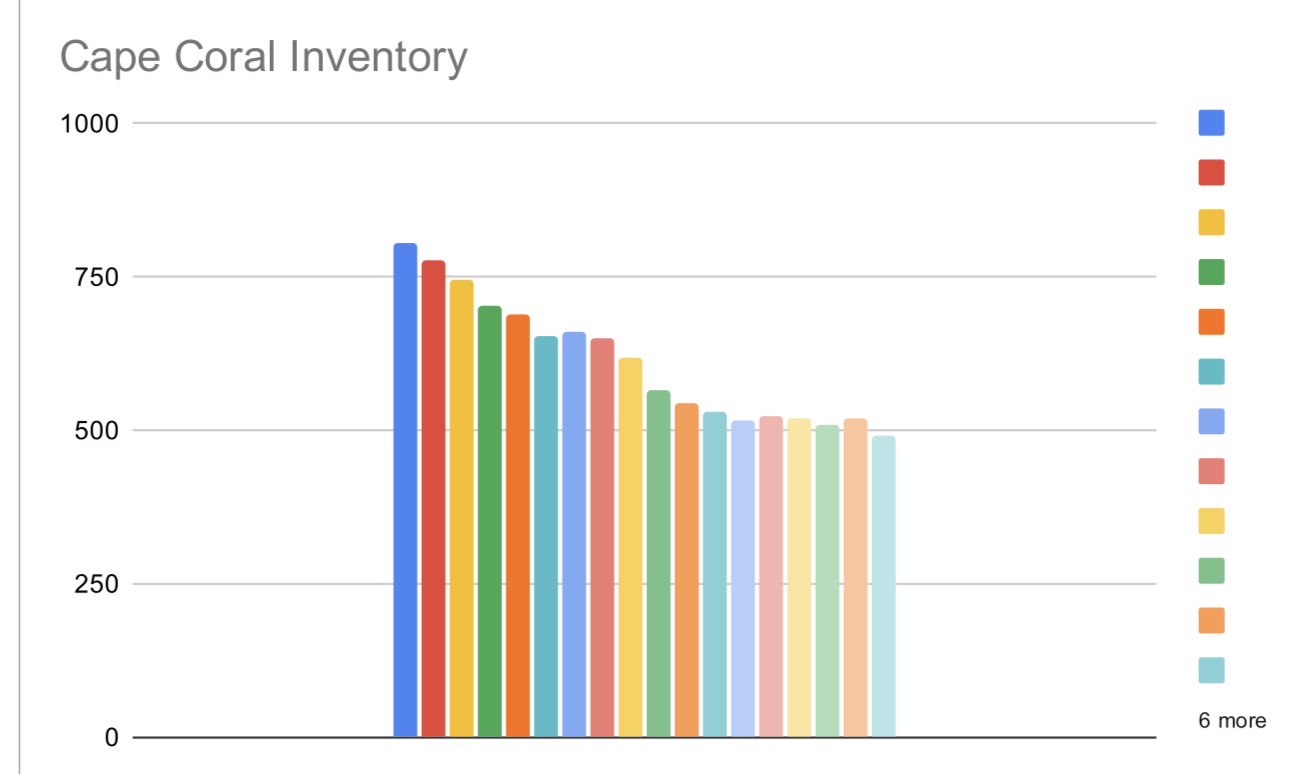
Cape Coral Rental Inventory – YTD 2026
The Cape Coral inventory chart shows a drastic decline in active rental inventory throughout YTD 2026, decreasing from roughly 800 available units earlier in the year to just under 500 units more recently (there was a high of 910 in November 2025). This is a 44.4% reduction in rental inventory since the high in November.
While this reduction is encouraging and may suggest the market is beginning to absorb some excess inventory, supply levels still remain much higher than what owners experienced during the COVID-era rental boom. Properties that are properly priced and presented well are continuing to lease, but overpriced homes are sitting on the market considerably longer.
The reduction in inventory is driven by owners lowering asking prices, and landlords offering incentives to attract tenants in an increasingly competitive market. There has been a noticeable shift of tenants moving from Ft Myers and Lehigh in to Cape Coral.
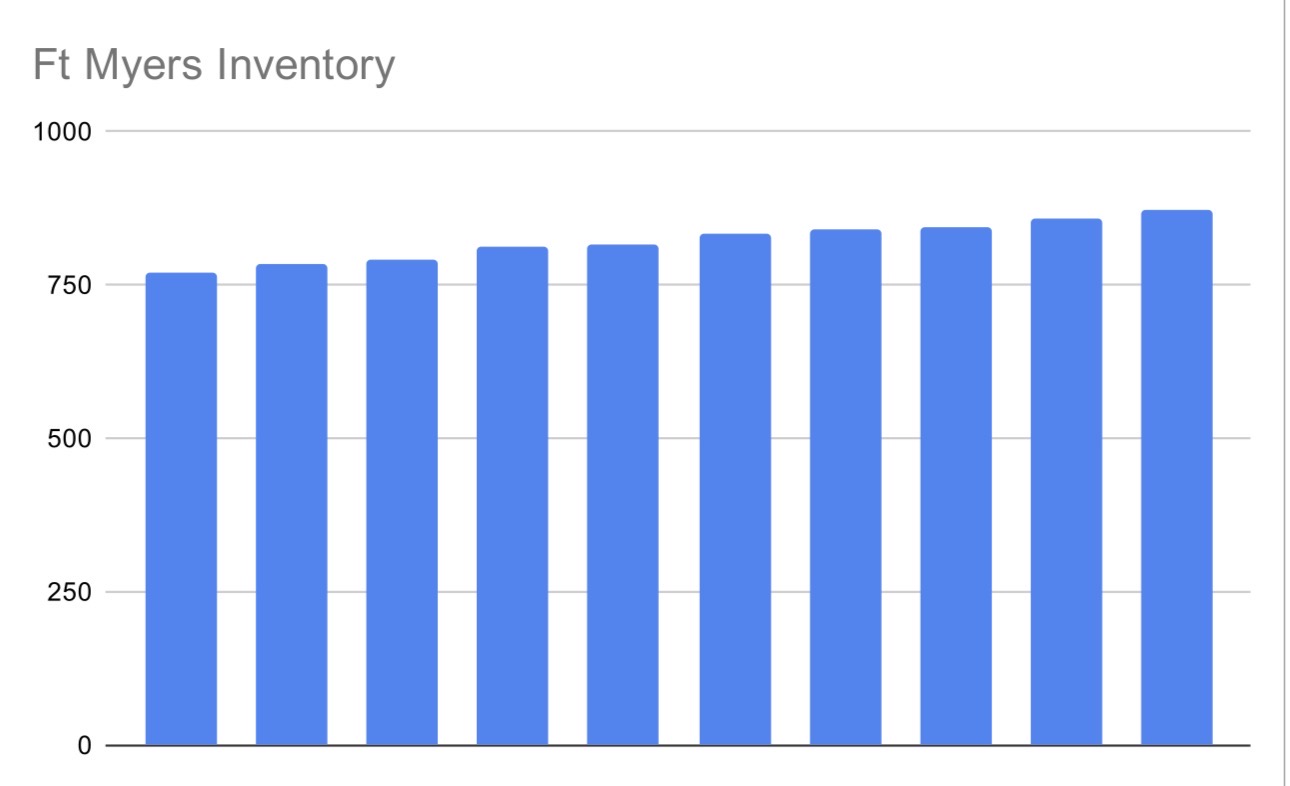
Ft. Myers Rental Inventory – YTD 2026
Unlike Cape Coral, the Fort Myers rental market continues to show increasing inventory levels throughout 2026. The chart reflects active inventory rising steadily from approximately 770 units to nearly 875 units, an increase of 13.2% in just the last 10 weeks. There is a high likelihood that in the next few weeks the inventory levels in Ft Myers will exceed Cape Corals high of 910.
This continued increase suggests that Fort Myers is still experiencing a buildup of available rental supply, largely driven by ongoing apartment construction and new rental listings entering the market faster than they are being absorbed.
As inventory continues rising, tenants maintain strong negotiating power, forcing landlords to compete more aggressively on pricing, concessions, and property condition.
As Cape Corals inventory has decreased and Lehigh's inventory levels have remained virtually unchanged at 500 for the last 7 weeks, we are very concerned with the increasing levels in Ft Myers. The normally stable market of Ft Myers has seen a lot of volatility this year with increased turnover and longer vacancy periods.
What to Expect Moving Forward
The remainder of 2026 will likely continue to favor tenants. We expect rental inventory to remain elevated, pricing to stay competitive, and vacancy periods to remain longer than historical averages.
Owners should prepare for continued competition from:
- New construction homes
- Large apartment communities with aggressive incentives
- Higher overall rental supply
- More price-sensitive tenants
Until the market fully stabilizes, success will depend heavily on:
- Accurate and realistic pricing
- Property condition and presentation
- Strategic marketing
- Fast response times and tenant communication
The positive outlook is that we are likely moving closer to market equilibrium. Depending on the city, if inventory growth begins slowing and demand remains stable, we could start seeing rental pricing stabilize and maybe increasing toward late 2026 or early 2027.